Welcome to the first issue of our quarterly newsletter.

Founder’s Note

There is a Yoruba saying: “Ọmọ ti a ko ko, ni yoo gbe ile ti a ko ta” — the child we refuse to train will sell the house we built. I carry that proverb to Apapa Odan.
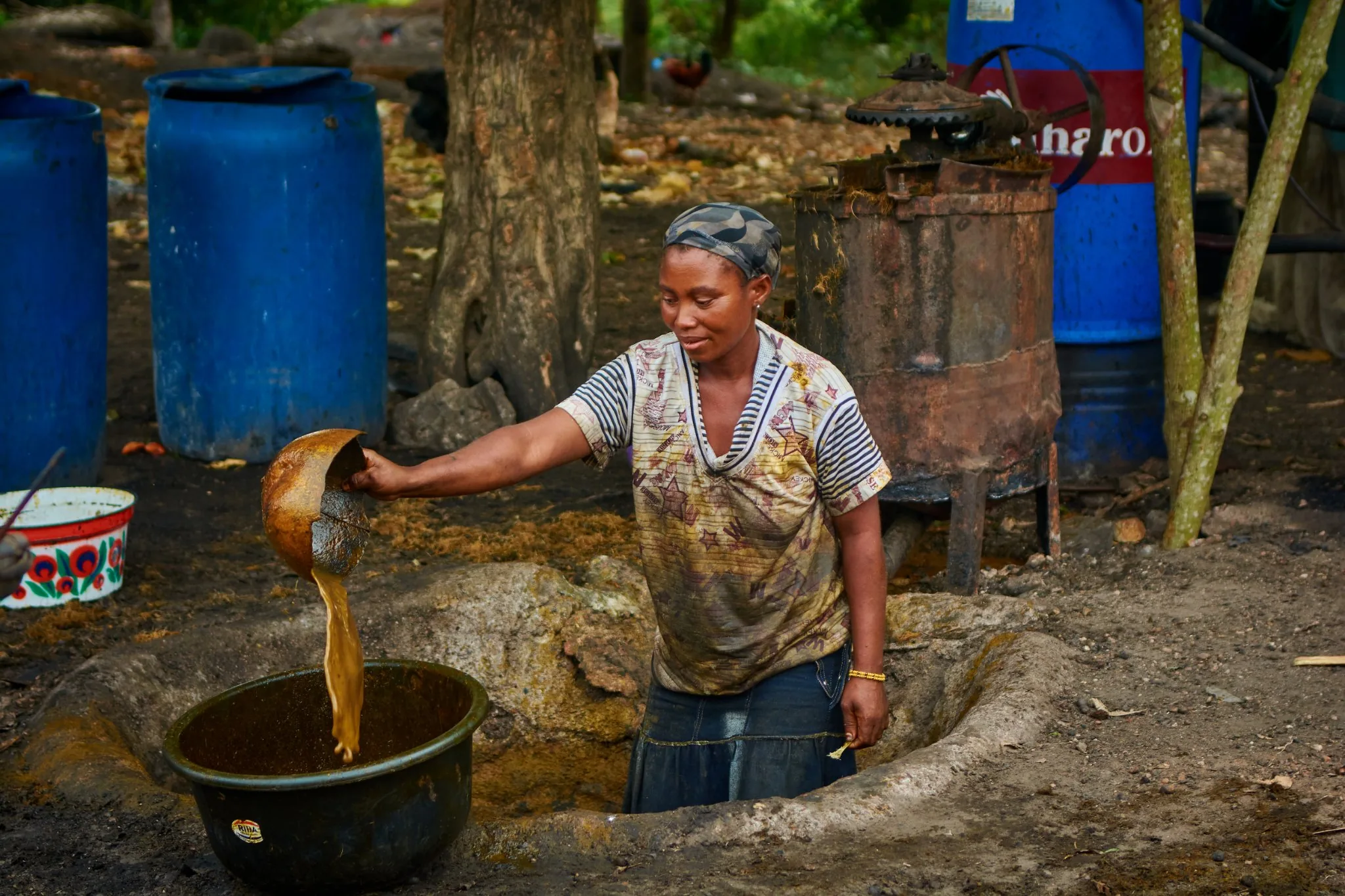
The women who process palm oil — fires already lit when we arrived, the thick, sharp smell of oil in the air — kept thanking us: ẹ ṣe o, ẹ ṣe o. Not for visiting. Because their children now come home repeating lessons at the table, asking questions nobody used to ask in that house. One woman laughed when we asked to sit and watch: “You want to watch us suffer?” Then she kept talking anyway.
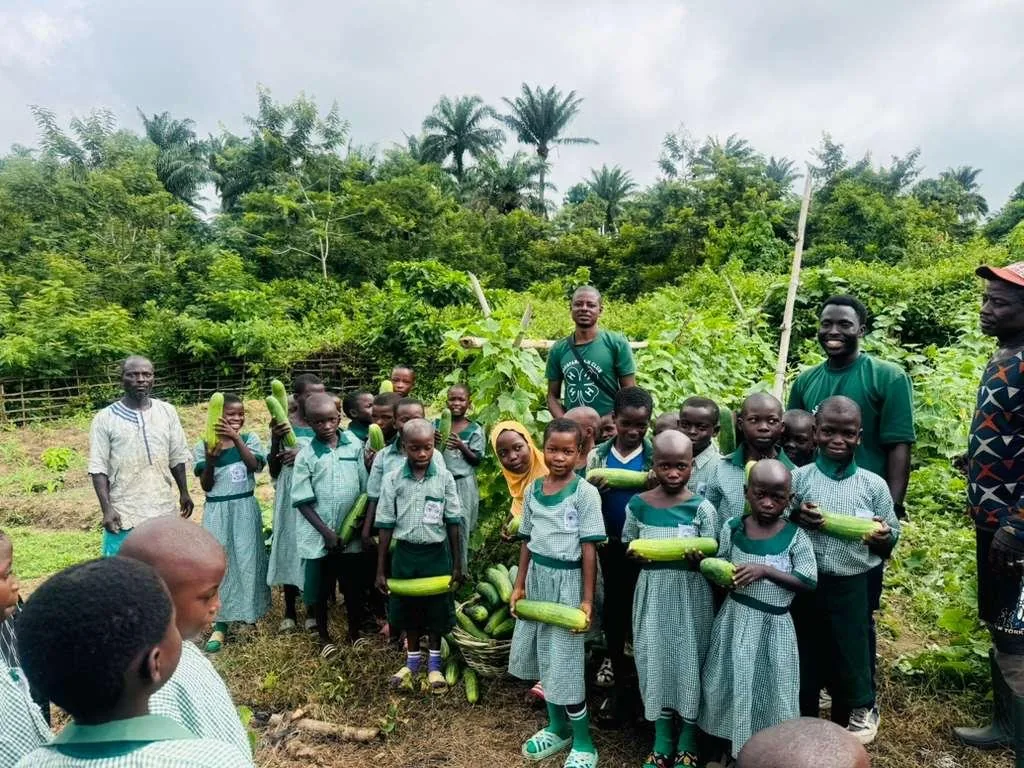
And in the school garden, the real lesson was patience. For weeks the children could only look — checking the soil daily like it might speak — asking Farmer Adebayo the same question in new ways: when can we plant? Then harvest morning came, and they held cucumbers grown with their own hands, grinning from ear to ear. That kind of patience is not learned from a blackboard; it comes small-small, with red earth under your fingernails.
That is why this newsletter exists. Four times a year, we bring you into the field with us — the real one: the waiting, the muddy hands, the lessons that worked.
The numbers from this term tell their own story — leadership scores more than doubling, girls and boys growing side by side. But numbers only matter because of the faces behind them.
Thank you for reading our first issue. Write to us, volunteer, or share this with someone who believes young Nigerians can see agriculture as a respected path forward.
Which part of this quarter’s story will you carry with you? We would love to hear.
— Adeoti Adebayo, Founder, BAGSfarm
Ẹ Ṣe O (Thank You): What the Women of Apapa Odan Taught Us
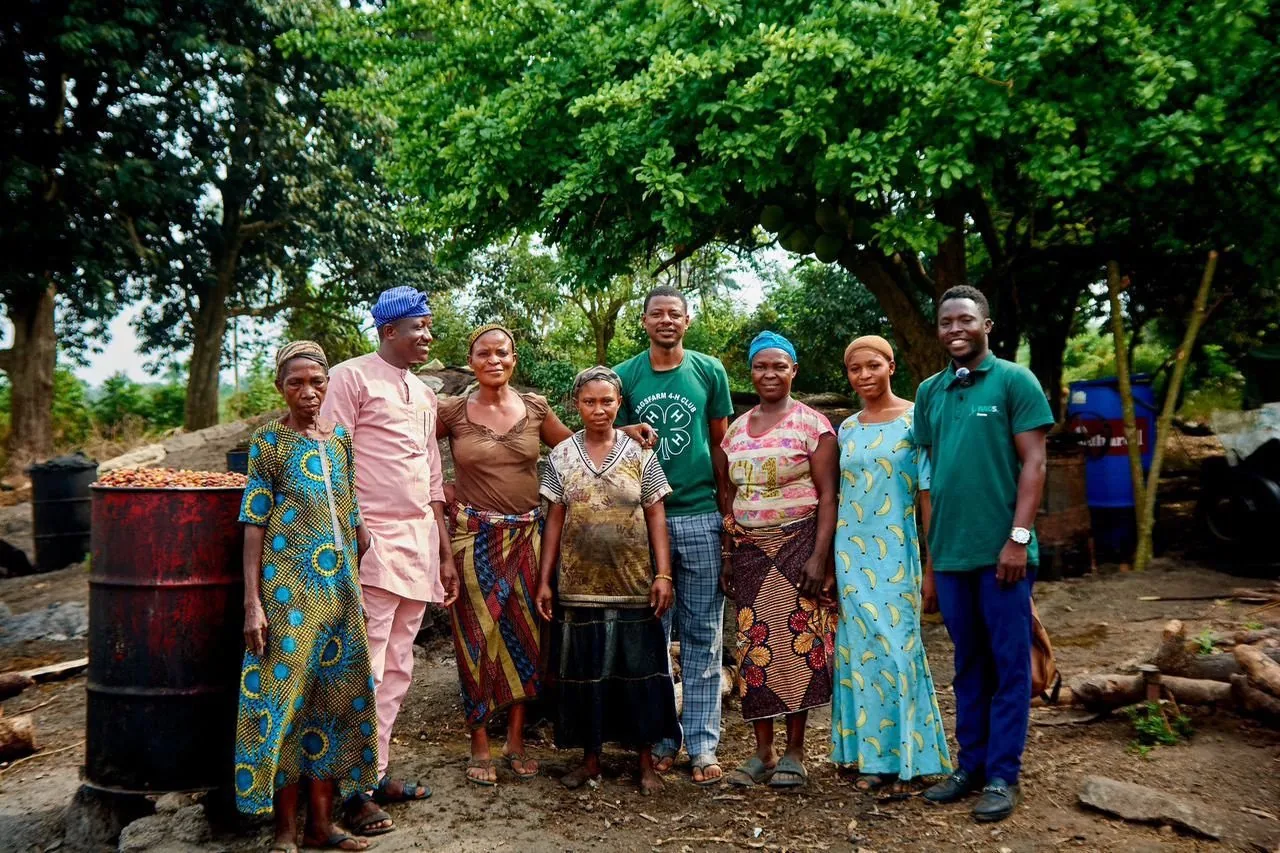
We didn’t go to Apapa Odan with much of a plan this quarter. Just went. Sat with the women who process palm oil there, watched them work, let the conversation happen however it wanted to.
The fires were already going when we got there. Oil being stirred, that smell everywhere, thick, a little sharp. One of the women laughed when we asked if we could just sit and watch for a while. “You want to watch us suffer?” she said, not quite joking. But she kept talking anyway. Her mother did this work before her. Her hands know it now without her having to think.
Somewhere in the conversation we asked about their children, and that’s when everything shifted. They talked about their kids coming home from school full of it, repeating lessons at dinner, asking questions nobody used to ask in that house. You could hear how proud they were. Not proud in a performative way. Proud like people who’ve watched something change.
And then the thank-you started. Ẹ ṣe o. Repeatedly, until it stopped sounding like a phrase and started sounding like something they needed to say more than once for it to land. Not for the visit. For all of it, for showing up before, for teaching their children something that clearly followed them home.
One woman held our hands before we left and said it again, low, almost to herself.
That’s the part we keep coming back to. Because this is what moves the work forward, not the lessons in a classroom, but moments like this, where a mother tells you her child won’t stop talking about what they learned.
It’s the same instinct behind 4-H’s push to keep families and communities inside a child’s education, not outside it.
The Wait Was the Hardest Part
The kids had been asking about the garden for weeks before we even let them near it. When can we plant? Is it ready? Every day someone was out there checking the soil, like it might tell them something if they looked hard enough. By the time we finally handed them the seeds, they’d already imagined the whole thing a hundred times over.
Most of the questions ended up landing on Farmer Adebayo, the garden coordinator. Why does it need water every day? Why isn’t it growing yet? Can we eat it now? He answered the same questions more than once, some days more than a few times, and never seemed to mind.
At some point he started telling them cucumbers aren’t just something to eat and forget, they’re mostly water, which is why they’re so good for staying hydrated, and they carry vitamins that are good for the skin and for digestion too. The kids liked that part more than expected. Suddenly it wasn’t just a vegetable growing in the dirt, it was something with a reason to care about.
Planting cucumbers isn’t complicated. But try telling that to a child staring at a patch of soil, expecting something to happen overnight.
The first week or so was the hardest, nothing to see, and still they kept going back to look, like the waiting itself was teaching them something nobody had actually told them to learn.
Then the vines came. Slow at first, then not so slow. And the questions changed, from “when” to “how much longer” to, eventually, “can we pick it now?”
That kind of patience, the real kind, the kind you can’t fake for a child, isn’t something you get from a book. They just had to sit with it, day after day, asking Farmer Adebayo the same questions in new ways, until it was finally ready.
When harvest day came, it showed on their faces. Cucumbers in hand, dirt still under their nails, grinning like they’d done something no one had ever done before. In a way, for them, they had.
It’s a small plot. But every child who waited, watched, and finally picked something they grew with their own hands carries that with them, long after the cucumbers are gone.
— Adeoti Adebayo
A Test at the End of Every Lesson
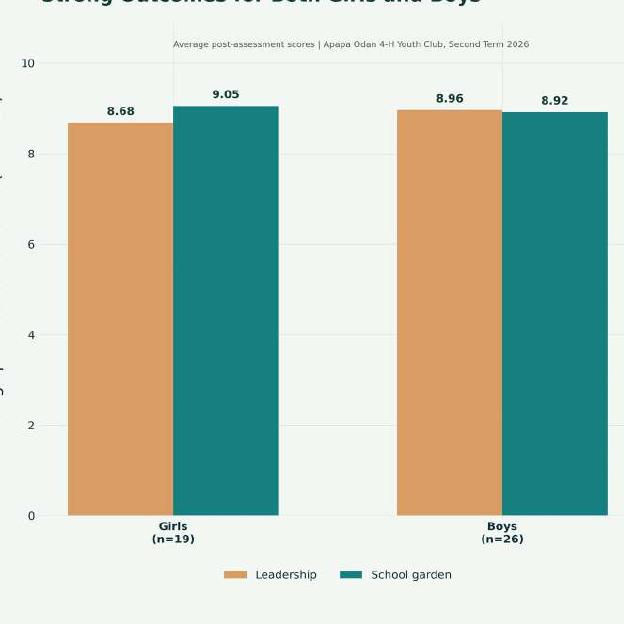
Every BAGSfarm teaching session ends the same way: with a test. Not a scary one, just a few questions to see what actually stuck. It’s become such a normal part of the rhythm that the kids barely blink at it anymore. Lesson, then a quick check. Over and over, all term.
Last quarter, the numbers told a story worth sitting with. In leadership, students started out scoring an average of 4.00 out of 10 before the lessons began. By the end, that average had climbed to 8.84, a jump of well over 100% from where they started. The school garden lessons told a similar story: pupils started at 4.09, and finished at 8.98. Forty-five pupils sat through the leadership assessments, forty-three through the garden ones, and the growth held up across the board, not a handful of standout students carrying the average, but the whole group moving together.
What stood out just as much was that the growth wasn’t lopsided. Girls and boys both finished strong, girls averaged 8.68 in leadership and 9.05 in school garden knowledge; boys came in at 8.96 and 8.92. However you slice it, the lessons were landing for everyone in the room, not just some of them.
None of this happens by accident. Every test is a small signal, which lesson worked, which one needs to be taught differently next time, which student needs a bit more time with a topic before it clicks. It’s a small discipline, repeated week after week, but it’s exactly how BAGSfarm knows its programs aren’t just keeping children busy — they’re actually teaching them something that stays.
Looking Ahead: Five Lessons Shaping Our 4-H Approach
- Diversify what students grow — and how. Beyond this season’s cucumber garden, we’re expanding into other crops and simple technologies like greenhouse and vertical farming systems, so students see more than one path into agriculture.
- Partner with local businesses and cooperatives. BAGSfarm is building relationships with local cooperatives and market partners in and around Apapa Odan — connections that can eventually help students see how what they grow moves from farm to market, and open doors for produce from the school garden to reach real buyers.
- Bring parents and community members in. Families have already started showing up in small but meaningful ways — some offering land, others helping with labor during planting and harvest, and many simply showing up to see what their children have been growing. That kind of presence is exactly what keeps the lessons alive outside the classroom.
- Build a network of teachers and mentors. BAGSfarm is working to bring more teachers into the fold — training them alongside the students so agricultural learning doesn’t stop when the term ends, and recruiting mentors from the community who can guide students long after a single lesson is over.
- Organize exposure visits. Plans are underway for students to step outside the school garden entirely — visiting working farms and agribusinesses nearby, so they can see, firsthand, what the next stage of everything they’re learning actually looks like in practice.
In Brief
New Board of Directors. BAGSfarm has appointed a new Board of Directors: Dr. Boren-Alpizar Amy, Prof. Tokunbo Oyesola, Dr. Binuomote Oluwamayowa, and Dr. Olalere Kunle. Their guidance will help steer BAGSfarm’s work in the years ahead.
BANI Youth Empowerment Foundation now registered. Our nonprofit arm, the BANI Youth Empowerment Foundation (“Empowering Youth, Transforming Rural Communities”), is now registered. The Foundation will carry our youth programs — school gardens, 4-H clubs, and leadership training — into more communities.
How to Get Involved
BAGSfarm’s vision is a generation of young Nigerians who see agriculture as a viable, respected career path. We welcome volunteers, mentors, and partners who want to help us reach more communities.
Developing rural communities through agriculture.